MD and IVD symbols and CE marking
The guarantee of safety in medical devices
What is it and who does it apply to?
The MD (Medical Device) and IVD (In Vitro Diagnostic) symbols identify on the label that a product is a medical device or an in vitro diagnostic device regulated by the MDR or IVDR. They do not replace the CE marking: they accompany it. The CE marking declares conformity with the regulation and, where a notified body has been involved, is followed by its identification number.
It applies to every manufacturer labelling devices for the European market, including non-EU manufacturers through their authorised representative, and to importers and distributors, who must verify that labelling is compliant before placing devices on the market.
At MeDev Consulting we classify the device, define the conformity assessment route and the labelling it requires, and review labels and instructions for use before printing, so that the CE marking and symbols are applied correctly first time.
What the regulation requires
Regulation (EU) 2017/745 (MDR) and Regulation (EU) 2017/746 (IVDR) require the CE marking to appear visibly, legibly and indelibly on the device or its sterile packaging, on the sales packaging and in the instructions for use, followed by the notified body number where one has been involved in the conformity assessment.
Chapter III of Annex I of both regulations sets the information that must accompany the device: identification of the manufacturer and importer, batch or serial number, date, UDI, storage conditions, sterile or single-use indication, and the MD or IVD symbol. The harmonised standard EN ISO 15223-1 defines the pictograms that express that information without text.
Importers and distributors must check, before placing devices on the market, that the device carries the CE marking, that the declaration of conformity exists and that labelling and instructions comply, including the language required by each Member State.
What we do at MeDev Consulting
European Certification
MD and IVD Symbol:
the guarantee of safety in medical devices
Based in Barcelona, with more than 30 years of experience, we specialize in the comprehensive management of medical devices. Our track record allows us to face all the necessary steps for the market launch of your medical devices (class I, Is, Im, IIa, IIb, III) and in vitro (class A, As, B, C, D).
What are they?
Medical Device
Instrument, apparatus, implant, software or material intended to prevent, diagnose, treat or alleviate a disease in the human body, without exerting its main action by pharmacological means.
In vitro diagnostics
Reagents, instruments and systems intended for the examination of samples extracted from the human body —blood, urine, tissues— to obtain information on the physiological or pathological state of the patient.
Risk classification
4 classes according to duration, invasiveness and purpose. The higher the class, the greater the intervention of the notified body.
4 classes based on risk to the patient and clinical impact of the diagnostic result.
Regulatory framework in the EU
Applicable since May 2021. Requires robust clinical evaluation, continuous post-market surveillance and, for high classes, audit by an accredited notified body.
Applicable since May 2022. Introduces a more demanding classification that significantly expands the certification requirements for most manufacturers.
Verification of compliance in labeling
Class I:
CE self-certification + MD symbol
Class Im, Is, IIa, IIb or III:
CExxxx + símbolo MD
Class A:
CE self-certification + IVD symbol
Class As, B, C or D:
CExxxx + símbolo IVD
CExxxx: marking granted by a NB (notified body).
How we work
- 1
Classification
We determine the risk class and the conformity assessment route that applies to your device.
- 2
Labelling design
We define symbols, CE marking, notified body number, UDI and languages for label, packaging and instructions.
- 3
Review
We review label and IFU artwork against Annex I and EN ISO 15223-1 before printing.
- 4
Final verification
Conformity check of the labelled device before first placing on the market, also for importers and distributors.
Frequently asked questions
What is the difference between the MD symbol and the CE marking?
The CE marking declares conformity with the medical device regulation and is mandatory to market in the EU; the MD (or IVD) symbol identifies the type of device on the label. A medical device carries both.
When must the CE marking carry the notified body number?
Whenever a notified body has been involved in the conformity assessment: for medical devices, from classes Is, Im, Ir and IIa upwards; for in vitro diagnostics, from sterile class A and class B upwards. Non-sterile class I and class A devices carry the CE marking without a number.
Can I apply the CE marking myself?
Yes, for class I devices (non-sterile, without a measuring function and not reusable surgical instruments) and non-sterile class A devices, through self-certification: technical file, quality system, declaration of conformity and EUDAMED registration. For every other class you need a notified body.
Which symbols are mandatory on the label besides MD or IVD?
Those required by Annex I of the MDR for your device: manufacturer, date of manufacture, batch or serial number, UDI, storage conditions, the sterile indication and method where applicable, single use, and so on, expressed with the pictograms of EN ISO 15223-1.
In which language must the label and instructions be?
In the official language required by each Member State where the device is marketed; in Spain, in Spanish. Harmonised symbols reduce the amount of text, but they do not remove the obligation.
My product is software: does it also carry the MD symbol and CE marking?
Yes, if it has a medical purpose: software is a medical device under the MDR, is classified under rule 11 and must display the CE marking and labelling information within the application itself or in its documentation.
I am a distributor: what must I check on the label before selling?
That it carries the CE marking (with the notified body number where applicable), that the manufacturer's declaration of conformity exists, the identification of the manufacturer and, where relevant, of the importer and the authorised representative, the UDI and labelling in the required language. It is an MDR obligation, not a recommendation.
How do I know whether my app or algorithm is a medical device?
If it is given a medical purpose (diagnosing, preventing, monitoring, predicting, treating or supporting clinical decisions) it is a medical device, even if it runs on a phone or in the cloud. Guidance MDCG 2019-11 sets the qualification criteria and MDR rule 11 the class, which in most cases is IIa or higher and therefore involves a notified body.
Related news
Electronic instructions for use (eIFU): what manufacturers and importers need to consider
Regulation (EU) 2025/1234 broadens electronic instructions for use (eIFU): which devices may replace paper IFU and under what requirements.
The MHRA announces an additional extension of the UKCA marking standstill period
The MHRA announces an additional twelve-month extension of the UKCA marking standstill period for medical devices and IVDs in the UK.
Is my device a medical device?
I want to manufacture or import a product, but… is it a medical device? Or is it an in vitro diagnostic medical device? How can I tell?
Related projects

ASIROX - EVOLVE
Medical-aesthetic diode laser hair-removal platform for all skin phototypes.
Cervisense
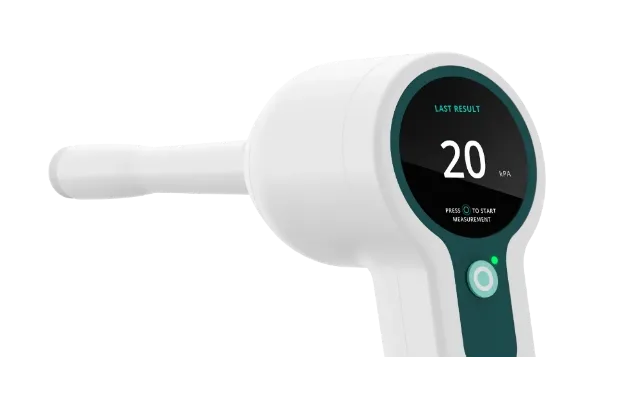
Device for practical assessment throughout pregnancy and support in critical obstetric situations.

CRABCLAMP
Sterile single-use medical device for handling catheters and guidewires.