From idea to medical device: development, industrialisation and CE marking in one team
...with fixed, fast quotes at every stage
What we do at MeDev Consulting
Feasibility study
Eight key questions answered in writing in one report, with a fixed, fast quote. Before spending a euro on prototypes.
Development and design control
We develop the device and its software under ISO 13485 design control, with risk management from the first sketch.
Testing and validation
Electrical safety and EMC, biocompatibility, sterilisation, usability: with accredited laboratories and no unnecessary tests.
Technical file, CE and industrialisation
Technical file, notified body, EUDAMED and AEMPS, and manufacturing of the first run or ongoing production with ISO 13485 certified suppliers.
We are neither an engineering firm that later looks for someone to certify, nor a consultancy that only says what to do: the same team develops, validates, documents and industrialises. Fixed, fast quotes at every stage.
What is it and who does it apply to?
You have an idea for a device and want to turn it into a medical device you can sell. Between the idea and the CE marking there is design, engineering, testing, technical file, notified body, licence and manufacturing; and every technical decision has regulatory consequences. Whoever develops should not decide alone what the product must be from the MDR point of view.
This is the service for entrepreneurs, clinicians with an idea and companies launching their first device, and also for manufacturers who want to outsource a complete development. At MeDev Consulting we take it end to end: we take care of the hardware and electronics, firmware, software and mechanics, test and validate with accredited laboratories, prepare the technical file and handle the notified body, EUDAMED and the AEMPS, and industrialise and manufacture with ISO 13485 certified suppliers.
The devices we have helped develop are on the market today with CE marking: see our projects. And we always start the same way: with a feasibility study that tells you, before you invest, whether your idea is a medical device, which class it will have and what it will cost to bring it to market.
What the regulation requires
A medical device must be developed under design control: EN ISO 13485 requires planning the design, setting the inputs (user, clinical and regulatory requirements), documenting the outputs, reviewing, verifying (does the product meet its specifications?), validating (does it serve its intended purpose in the user's hands?) and transferring to production. Without that documentary trail no technical file is possible.
The MDR adds the general safety and performance requirements of Annex I, risk management under ISO 14971 throughout the life cycle, the clinical evaluation and the product standards that apply: IEC 60601 for electrical equipment (electrical safety and electromagnetic compatibility), IEC 62304 where there is software, ISO 10993 for the biocompatibility of anything touching the patient, and the sterilisation standards if the device is sterile.
Which standards apply, which tests are needed and which class the device falls into is decided at the start, in the feasibility study: finding out once the prototype is built is the most expensive way to learn it.
Before investing: the regulatory feasibility study
It is very easy to spend on engineering and prototypes and then discover that certification costs as much again. That is why the first deliverable answers these eight questions in writing:
- What exactly the device doesFunction, operating principle and limits: what it is and what it is not.
- Who uses it and wherePhysician, physiotherapist, patient at home, laboratory: it changes the requirements and the class.
- Intended medical purposeThe sentence that defines the device and on which everything else hangs.
- Is it a medical device?Qualification under the MDR (or IVDR); if it is not, it needs no medical CE marking.
- Risk classI, IIa, IIb or III under the Annex VIII rules: it decides whether a notified body is needed.
- Applicable IEC/ISO standardsElectrical safety, software, biocompatibility, sterilisation, usability.
- Required testsWhat must be tested, in which laboratory and at which stage so it is not repeated.
- Route to CE, cost and scheduleWhat the manufacturer must do and a realistic estimate of investment and timing.
Engineering: we take care of the hardware, firmware, software and mechanics
We are not just the regulatory side. We design and develop the product, and we have practised each discipline on devices that are on the market today. For what requires accreditation or specific facilities (testing, sterilisation, manufacturing) we work with partners with extensive experience in the design, development and verification and validation of every phase under ISO 13485:
Hardware and electronics
Control and power electronics, sensors, electrical safety and electromagnetic compatibility under IEC 60601.
ASIROX EVOLVE Pro (diode laser)Firmware and software
Control firmware, user interfaces and software under the IEC 62304 life cycle, with its risk management and verification.
ASIROX Syngular, Préime DermaFacialMechanics and industrial design
Mechanical design, plastic and metal parts, ergonomics and packaging, conceived from the start to be manufactured.
VARIXIO POD, CRABCLAMPSterile and single-use systems
Sterile single-use devices: materials, packaging, sterilisation validation and biocompatibility testing.
TB1-K v2 CT Emerge, CRABCLAMPFrom prototype to production run
- 1Functional prototype
A working device on which the design is verified and corrected as needed before it is frozen.
- 2Pre-series and testing
Production-representative units for accredited laboratory testing, usability validation and process validation.
- 3First production run
Manufacturing of the first run with ISO 13485 certified suppliers and, if you wish, ongoing production with follow-up: like the 32 units of TB1-K v2 or the first run of Cervisense.
The product is yours
You are the legal manufacturer and the owner of the product: the design, technical file, CE certificate and EUDAMED and AEMPS registrations are in your name. MeDev Consulting has no products of its own and takes no stake in yours; we support you as consultants and as a development team, and all documentation remains with you. Ownership of the design and documentation is expressly set out in the contract, and every project has a lead engineer as single point of contact from day one.
Who leads your project
Miguel Angel Gómez
Industrial Engineer with over 30 years of experience developing medical devices from the idea to CE marking and manufacturing. Founder of MeDev Consulting and technical and regulatory lead on every project: the person you will work with.
How we work
- 1
Feasibility
Regulatory feasibility study: qualification, class, standards, tests, route to CE, cost and schedule.
- 2
Design and prototype
Requirements, architecture, device and software design, functional prototypes and risk management.
- 3
Verification and validation
Accredited laboratory testing, usability and process validation, clinical evaluation.
- 4
Technical file and CE marking
Technical file, notified body where applicable, EUDAMED registration and AEMPS licence.
- 5
Industrialisation
Transfer to manufacturing, first production run and, if you wish, ongoing manufacturing with follow-up.
Frequently asked questions
Who owns the product and who is listed as manufacturer?
You do. You are the legal manufacturer and the owner of the design, the technical file, the CE certificate and the EUDAMED and AEMPS registrations. MeDev Consulting has no products of its own and takes no stake in yours: we support you as consultants and development team, and all documentation remains with you.
I have an idea: how do I know whether it is a medical device?
By its purpose. If the manufacturer intends it to diagnose, prevent, monitor, treat or alleviate a disease or injury, it is a medical device under the MDR even if it looks like a wellness gadget. It is the first question the feasibility study answers, because everything else depends on it.
Which class will my device have?
It is set by the rules of Annex VIII of the MDR according to duration of use, invasiveness, whether it is active and its purpose: from class I (self-certification) to class III (notified body and demanding clinical evaluation). Electrical equipment for clinical use is usually IIa or IIb. We determine it in writing before designing anything.
How much does it cost to bring an idea to market?
It depends on the class, the technology (electronics, software, sterility) and the tests the standards require. That is why we start with the feasibility study, with a fixed, fast quote: it gives you a realistic estimate of the total investment and the schedule before you spend on prototypes.
Do I need to be a manufacturer with an AEMPS licence?
If you are going to place the device on the market under your name, yes: you will be the legal manufacturer and will need the AEMPS prior operating licence and EUDAMED registration, in addition to the quality system. We handle it as part of the project.
Can I patent the idea and certify it at the same time?
Yes, and it is wise to start the patent before showing the product to third parties. Certification neither prevents nor replaces it: one protects the invention, the other proves it is safe and performs. We coordinate the timing so neither blocks the other.
Which tests does electrical equipment need?
At least electrical safety and electromagnetic compatibility under IEC 60601, in an accredited laboratory; if it has software, the IEC 62304 life cycle; if it touches the patient, ISO 10993 biocompatibility; and IEC 62366-1 usability. The feasibility study lists them so that testing is done once.
Do you do the engineering or only the regulatory part?
Both. We take care of the hardware and electronics, firmware, software and mechanics under design control, test and validate with accredited laboratories and, for manufacturing, work with partners with extensive experience in the design, development and verification and validation of every phase under ISO 13485, which we coordinate. The same team that designs is the one that documents and certifies.
Can you manufacture it afterwards?
Yes. We industrialise the device and manufacture the first run or ongoing production with quality follow-up, as we do today for several of the projects you can see on the website.
Related news
ISO 10993-3:2026 - New edition
New 2026 edition of EN ISO 10993-3 on biological evaluation: genotoxicity, carcinogenicity and reproductive toxicity of medical devices.
ANVISA publishes two guidance manuals for the regularisation of medical devices
ANVISA publishes two manuals for regularisation in Brazil: notification of class I and II materials (RDC 751/2022) and IVD products (RDC 830/2023).
IVDR: if you manufacture a 'legacy' class C device, you have little more than 30 days left.
IVDs self-declared under Directive 98/79/EC that are now class C under IVDR: little more than 30 days of the transition period remain.
Related projects

TB1-K v2 - CT Emerge
Single-use medical device for the safe preservation and transport of donor kidneys.
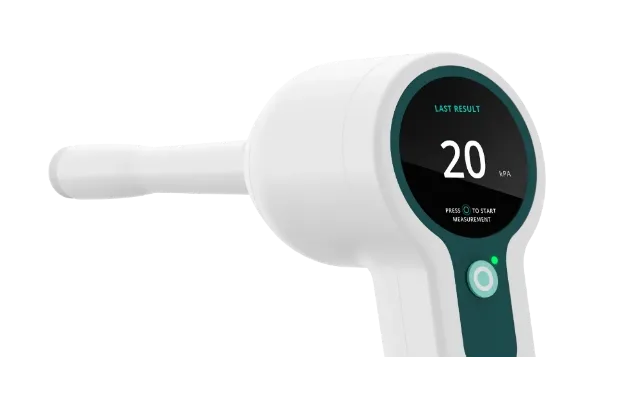
Cervisense
Device for practical assessment throughout pregnancy and support in critical obstetric situations.

ASIROX - EVOLVE
Medical-aesthetic diode laser hair-removal platform for all skin phototypes.
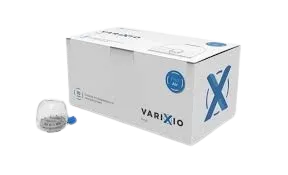
VARIXIO POD Air
System for preparing sclerosant foam for the treatment of varicose veins.
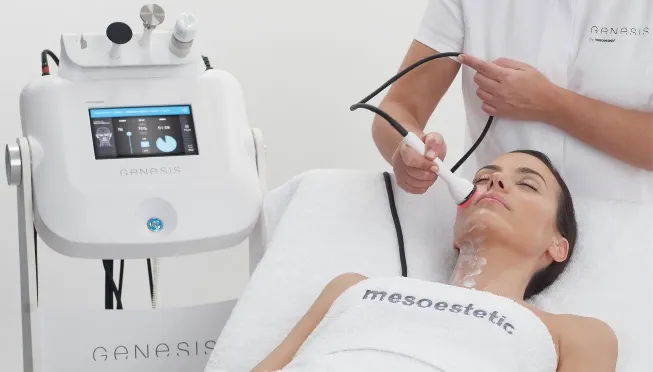
Genesis
High-power multi-technology radiofrequency system combining versatility and efficacy.
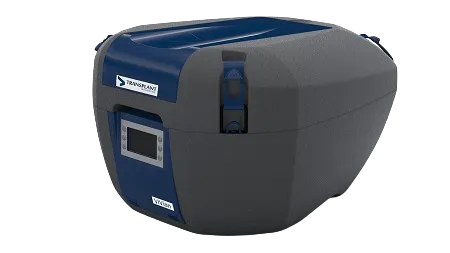
VIVIAN Project
Evolution of the TB1K v2 system enabling multi-use operation through a sterile disposable tray and rechargeable power.