Ethylene oxide and gamma/beta radiation sterilisation validation (ISO 11135 and ISO 11137)
...we take care of the whole process!
What is it and who does it apply to?
Ethylene oxide (EtO) or gamma and beta radiation sterilisation validation means demonstrating in writing that the process, with that device and that packaging, reaches the required sterility assurance level and does so reproducibly, batch after batch. It is not the same as sterilising: without validation, a device that has gone through the steriliser cannot be labelled sterile.
It applies to every manufacturer of sterile devices, whether sterilising in-house or outsourcing it: the steriliser validates its equipment, but the validation of the specific device and the responsibility before the notified body remain with the manufacturer. It also applies to contract sterilisers who want to offer their customers already-qualified processes.
At MeDev Consulting we validate the two most widespread methods for medical devices: ethylene oxide (EtO) and radiation (beta and gamma), and we design the routine tests that keep the process under control afterwards.
What the regulation requires
Regulation (EU) 2017/745 (MDR) and Regulation (EU) 2017/746 (IVDR) require devices supplied sterile to be manufactured and sterilised using validated processes under controlled conditions, as part of the general safety and performance requirements; the notified body assesses that validation within the technical documentation.
The harmonised standards of reference are EN ISO 11135 for ethylene oxide and EN ISO 11137 for radiation, together with ISO 11737 for bioburden determination and sterility tests. They define how to qualify the equipment (IQ), the process (OQ) and the product (PQ), and which routine controls to maintain.
Validation is not a one-off: it requires periodic revalidation and a documented assessment of any change in device, packaging, load configuration, process or steriliser.
What we do at MeDev Consulting
Sterilization Process Validation
We take care of the whole process!
Ethylene Oxide
Complete validation of Ethylene Oxide (EtO) sterilization processes.
Radiation
Specialists in radiation sterilization process validation.
Routine Testing
We design, evaluate and carry out routine tests quickly and efficiently.
Sterilization process validation is a long and laborious method. At MeDev Consulting we are specialists in the validation of Ethylene Oxide and Radiation sterilization processes.
We can handle designing, evaluating and carrying out the entire process including routine tests, all quickly and efficiently.
How we work
- 1
Families and worst case
We group your catalogue into families and define the device that poses the greatest challenge to the process, with its written justification.
- 2
Validation protocol
We write the IQ/OQ/PQ protocol: loads, cycles, samples, bioburden, biological indicators and acceptance criteria.
- 3
Execution
We coordinate steriliser and laboratory, supervise cycles and tests and resolve deviations as they arise.
- 4
Report and routine
Validation report for the technical file, process release, and the routine testing and revalidation plan.
Frequently asked questions
EtO or radiation: how do I choose the method for my device?
By compatibility of the material and the packaging (radiation degrades some polymers; ethylene oxide leaves residues that must be controlled), by the availability of nearby sterilisers and by the cost per batch. We assess it with you before designing the validation.
How often must the process be revalidated?
Periodically, according to the plan defined in the validation itself, and whenever the device, the packaging, the load configuration, the process or the steriliser changes. Each change must be assessed in writing to decide whether partial or full revalidation is required.
What is routine testing and who performs it?
The checks on each batch or each period that show the process remains under control: bioburden, biological indicators, ethylene oxide residues or absorbed dose in radiation. We design and manage them with the laboratory and the steriliser.
I outsource sterilisation: is the validation the steriliser's responsibility or mine?
The manufacturer's. The steriliser validates its equipment and its process, but the validation of the specific device and the responsibility before the notified body lie with the manufacturer who applies the CE marking.
Can I group several devices in one validation?
Yes, through product families with a worst-case device representing all of them. It is what makes validation economically feasible for wide catalogues, and it must be justified in writing.
What is SAL 10⁻⁶?
The sterility assurance level required for sterile devices: a probability of one non-sterile unit in a million. The validation demonstrates that the process reaches it reproducibly.
Do I need a clean room to manufacture sterile devices?
It depends on the device and the method. What the regulation requires is control of the bioburden before sterilisation, and a clean room is the usual way to achieve it for devices going to ethylene oxide or radiation. We analyse it case by case.
Latest regulatory news
ISO publishes the new ISO 9001:2026
ISO 9001:2026 replaces the 2015 edition: quality culture, risks and opportunities, change management and a three-year transition ending on 30-09-2029.
IVD controls without assigned values: what MDCG 2020-16 rev.5 clarifies
Revision 5 of MDCG 2020-16 (September 2026) changes only Rule 7 of the IVDR. We explain where the class B boundary now lies for quality control materials.
ANVISA publishes two guidance manuals for the regularisation of medical devices
ANVISA publishes two manuals for regularisation in Brazil: notification of class I and II materials (RDC 751/2022) and IVD products (RDC 830/2023).
Related projects
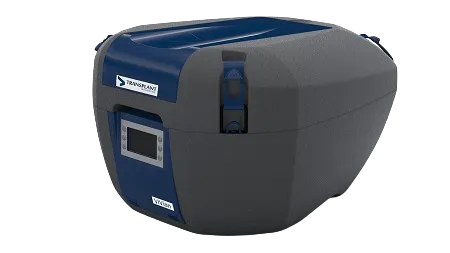
VIVIAN Project
Evolution of the TB1K v2 system enabling multi-use operation through a sterile disposable tray and rechargeable power.
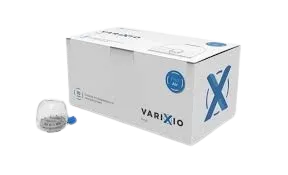
VARIXIO POD Air
System for preparing sclerosant foam for the treatment of varicose veins.

CRABCLAMP
Sterile single-use medical device for handling catheters and guidewires.